
Bond approval is a major milestone, but it is not the final step. After the bank approves your home loan, several legal, administrative and practical steps still need to happen before the property is registered in your name and you can move in with confidence.
This guide explains the typical buyer timeline after bond approval in South Africa, from the grant letter to attorneys, insurance, registration and moving preparation.
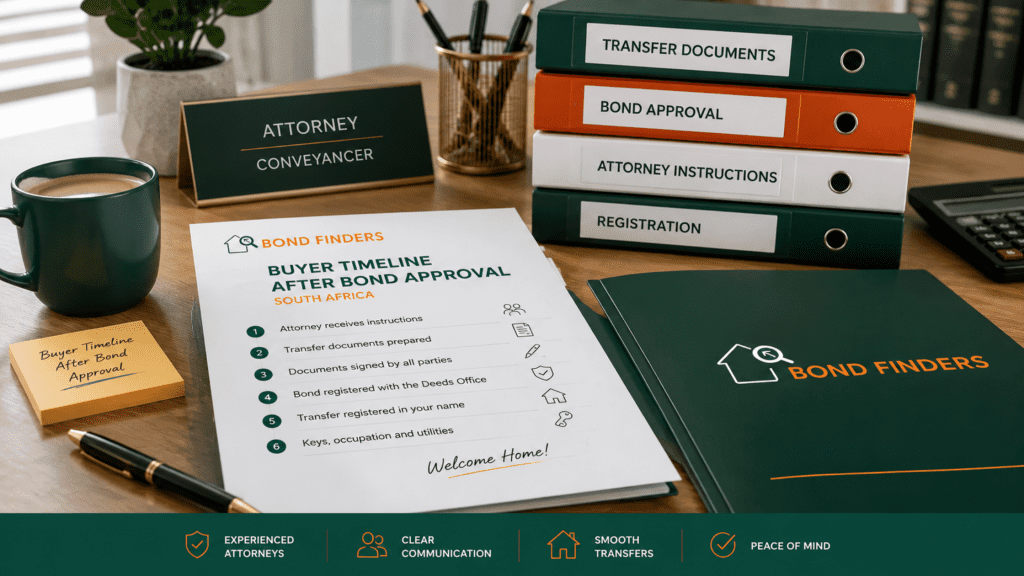
1. Review the bond grant or approval letter
Your approval letter sets out key details such as the approved loan amount, interest rate, term, conditions and expiry timelines. Read it carefully and ask questions before accepting.
Check whether the approval is subject to valuation, insurance, deposit payment, updated documents or other conditions. A conditional approval is positive, but the conditions must still be met.
2. Accept the offer and meet bank conditions
Once you choose the bank offer, the lender will issue instructions for the next steps. You may need to sign acceptance documents, provide updated statements, confirm insurance or pay required amounts.
Keep communication fast at this stage. Delayed signatures or missing information can delay attorney work and registration.
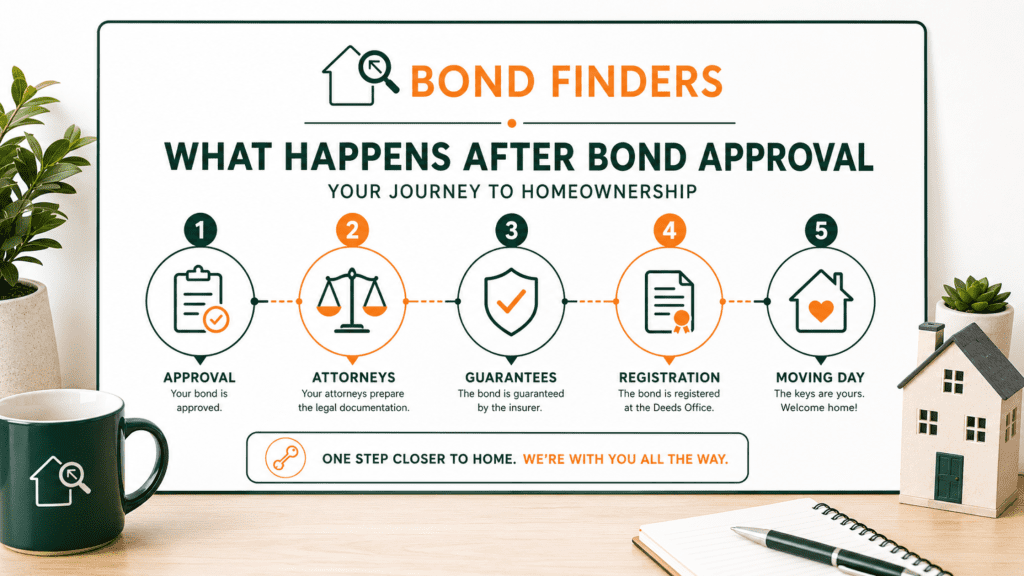
3. Attorneys are appointed
Property transfers usually involve a transferring attorney, bond registration attorney and sometimes a cancellation attorney if the seller has an existing bond. In some transactions, one firm may perform more than one role.
The Deeds Office explains that property transfer is the process of registering or transferring the title deed into the buyer’s name. Attorneys prepare the documents that make this possible.
4. Guarantees and financial arrangements are prepared
The bank’s attorneys prepare bond documents and guarantees. A guarantee is the bank’s undertaking that funds will be paid on registration, subject to conditions.
The buyer may also need to pay transfer costs, bond registration costs and other attorney invoices before lodgement can proceed. Ask for written cost breakdowns and payment deadlines.
5. Insurance and compliance items are finalised
Banks often require homeowners insurance for the property structure before registration. Life cover may also be discussed depending on the bank and buyer profile.
Separately, the seller and attorneys may coordinate compliance certificates such as electrical or other certificates required for the transaction. Your estate agent and attorneys should confirm what applies to the property.
6. Documents are lodged at the Deeds Office
Once all parties are ready, documents are lodged at the Deeds Office. SA Home Loans notes that, once lodged, the Deeds Office process can take approximately seven to ten working days before registration, though the overall registration process can take longer and delays can happen if information is incomplete.
During this stage, the buyer is close to ownership, but the property is not yet registered in their name.
7. Registration happens and ownership transfers
On registration, the bond is registered and the property transfer is recorded. The bank pays guarantees, the seller is paid, and ownership is transferred into the buyer’s name.
This is the point where the legal ownership change is completed. Your attorney, estate agent or bond consultant will usually notify you once registration has happened.

8. Prepare for moving day
While attorneys are working, prepare your move. Arrange insurance, utilities, fibre or internet, security, cleaning, removals, change of address, school transport and any early maintenance.
If occupational rent applies because you move in before registration, make sure the amount, date and responsibilities are clearly set out in writing.
How Bond Finders helps after approval
Bond Finders does not stop being useful once an approval arrives. The team can help you understand bank offers, conditions, signing requirements and the next steps toward registration.
For buyers, this reduces uncertainty during the waiting period between “approved” and “registered”.
Frequently Asked Questions
Is bond approval the same as owning the property?
No. Bond approval means the bank has approved the loan subject to its terms and conditions. Ownership transfers only when the property is registered in your name at the Deeds Office.
How long after bond approval does registration take?
Timelines vary by transaction. Attorney readiness, seller bond cancellation, municipal figures, guarantees and Deeds Office processing can all affect timing.
Who appoints the bond attorney?
The bank usually appoints the bond registration attorney. The seller usually appoints the transferring attorney, unless the sale agreement provides otherwise.
When can I move in?
Usually after registration, unless the parties agree to occupation before transfer. Early occupation should be recorded in writing, including occupational rent and responsibilities.
Bond approved? Stay on track to registration. Contact Bond Finders for guidance on your bank offer, conditions and next steps after approval.