
A joint bond application can help couples combine income and buy a property together. It can also make the application more complex because the bank assesses both applicants’ finances, credit records and legal responsibility.
Before you apply together, have honest conversations about income, debt, savings, ownership and what happens if circumstances change. A home loan is a long-term commitment, and both the relationship and the numbers need to be ready.
What is a joint bond application?
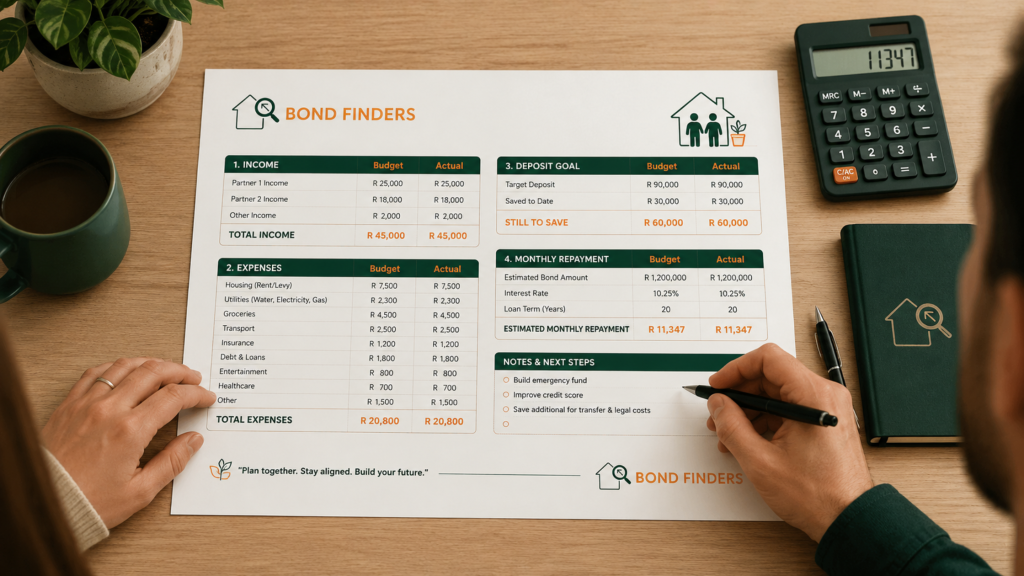
A joint bond application is when two or more applicants apply for the same home loan. Couples often do this because combined income can improve affordability and support a higher purchase price.
The bank will still assess the full risk. That includes each applicant’s income, expenses, employment stability, credit behaviour and existing debt.
How banks assess affordability
Joint income is helpful, but it is not the only factor. The bank looks at net income, monthly expenses, current credit commitments, dependants and whether the proposed repayment is sustainable.
South Africa’s credit framework under the National Credit Act promotes responsible credit granting and discourages reckless lending. In practice, that means the bank should not approve a bond purely because the property is desirable; the repayment must be affordable.
Both credit records matter
In a joint application, one strong credit profile does not always cancel out another weak one. Missed payments, defaults, judgments or heavy unsecured debt can affect the outcome.
Couples should check both credit records before applying. This gives time to correct errors, settle problem accounts and decide whether to apply now or improve the profile first.
Debt can reduce buying power
Vehicle finance, personal loans, credit cards and retail accounts reduce the amount available for a bond repayment. Even if one partner earns well, the combined debt picture matters.
Before applying, list all debts and decide whether paying down short-term credit could improve affordability. Avoid taking on new credit while preparing to buy property.
Deposit, transfer costs and emergency savings
Couples should agree where the deposit and transaction costs will come from. In addition to the purchase price, buyers may need cash for transfer costs, bond registration costs, transfer duty if applicable, attorney fees and moving expenses.
Keep an emergency fund separate from purchase costs. A new home often brings immediate expenses such as minor repairs, appliances, curtains or security upgrades.
Legal and relationship considerations
A joint bond creates shared responsibility. If both parties sign the loan agreement, both are usually responsible for repayment. Ownership shares, marital regime, cohabitation agreements and what happens after separation should be discussed with a qualified legal professional where needed.
Do not rely on informal assumptions. Put important agreements in writing and understand how the title deed and bond documents will reflect ownership and responsibility.
How to prepare a stronger joint application
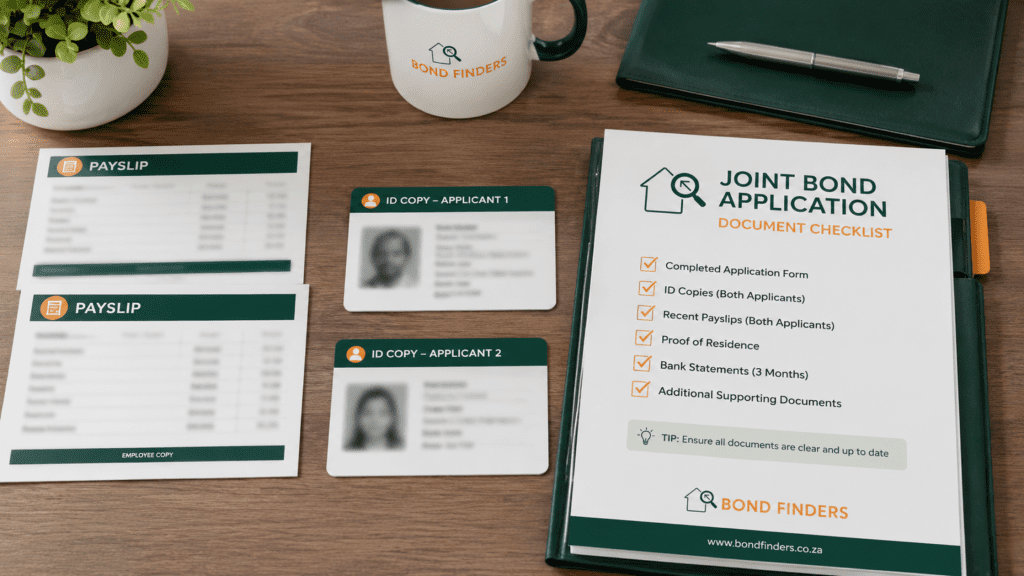
Prepare both applicants’ documents early. Include ID copies, proof of residence, payslips, bank statements, expense details and information on existing debt. Make sure the income and expenses disclosed match bank statements.
Agree on a maximum monthly repayment before viewing homes. This prevents one partner from feeling pushed into a bond that looks acceptable to the bank but feels uncomfortable at home.

How Bond Finders helps couples
Bond Finders can help couples prepare one complete application and compare offers from participating banks. A consultant can explain what each bank is asking for, how joint affordability is being assessed and what conditions apply to the offers.
For couples, this guidance can reduce confusion and help both partners understand the same information before signing.
Frequently Asked Questions
Can unmarried couples apply for a joint bond in South Africa?
Yes, unmarried couples can apply jointly, subject to the bank’s criteria. They should consider legal advice about ownership shares and what happens if the relationship changes.
Does a joint application guarantee a bigger bond?
No. Combined income may improve affordability, but existing debt, expenses, credit records and bank criteria still matter.
Are both partners responsible for the repayment?
Generally, where both applicants sign the loan agreement, both share responsibility for the debt. Buyers should confirm the legal position in their own documents.
Can one bad credit record affect the joint application?
Yes. Banks assess the application as a whole, and either applicant’s credit profile can influence the decision.
Buying together should feel clear, not confusing. Contact Bond Finders to prepare your joint bond application, compare bank responses and understand your next step.