
If you run your own business, freelance, or work on a contract basis, getting a home loan approved in South Africa is entirely possible, but banks assess your income very differently to how they’d treat a salaried applicant. Instead of a payslip and a fixed monthly figure, they want to see a track record, usually two to three years of consistent, properly documented income. Understanding this upfront saves a lot of frustration once you’re actually house hunting.
Why do banks treat self-employed applicants differently?
A salaried employee’s income is straightforward to verify: a payslip and a few months of bank statements, done. Self-employed income is less predictable by nature, even for a genuinely successful business, so banks want a longer track record before extending a loan that runs 20 years or more against it. It isn’t a judgement on your business; it’s simply a different risk profile that calls for different evidence.
What documents will you actually need to provide?
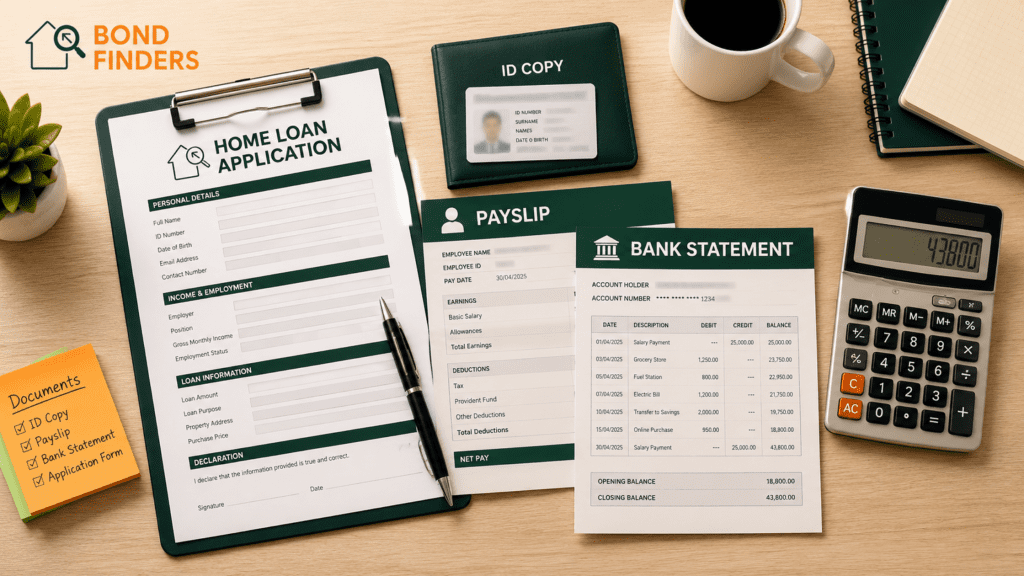
Expect to provide more than a salaried applicant would. Most banks want two to three years of financial statements, personal and business bank statements, recent tax returns, and sometimes management accounts if your last financial year-end was a while back. If your income varies month to month, be ready to explain why rather than hoping the bank won’t notice. The documents needed for a standard home loan application give a useful baseline, but self-employed applicants should treat that list as the starting point, not the full picture.
Does one bad year kill your chances?
Not necessarily, but it does complicate things. Banks are generally looking for a trend, not perfection. A dip explained by something specific and non-recurring is treated differently to a business that’s been declining steadily for three years running. Be upfront about it rather than hoping it goes unnoticed; an honest explanation, backed by figures, tends to land far better than an application that looks like it’s hiding something.

Can a bond originator make the self-employed process easier?
This is genuinely one area where working through an originator helps more than usual. Different banks weigh self-employed income differently: some are more comfortable with certain industries, some want three years of records where others will consider two, and some are simply more flexible with irregular income patterns. Submitting one packaged application to multiple banks means you’re not relying on a single lender’s particular appetite for self-employed risk.
Should self-employed buyers save a bigger deposit?
It’s not a requirement, but it tends to help. A larger deposit reduces the bank’s exposure and can offset some of the additional uncertainty that comes with variable income, sometimes resulting in a more favourable outcome than a low or no-deposit application would achieve. It’s also simply a buffer worth having if your income does fluctuate after you’ve taken on a monthly bond repayment.
How Bond Finders supports self-employed applicants
Bond Finders works with self-employed clients regularly and understands which banks tend to look more favourably on particular business types or income patterns. Getting your documentation right the first time avoids the back-and-forth that often delays self-employed applications specifically.
Frequently Asked Questions
Can self-employed people get a 100% home loan in South Africa?
It’s possible but less common than for salaried applicants, since banks generally view self-employed income as higher risk. Outcomes vary significantly by individual profile, so it’s worth discussing your specific situation with a consultant.
How many years of financial statements do I need as a self-employed applicant?
Most banks ask for two to three years, though requirements vary between lenders and depend on how established the business is. This is worth confirming for your specific circumstances before applying.
Will banks consider me if my income varies a lot month to month?
Yes, but they’ll want to understand the pattern and the reasoning behind the variation. Consistent overall income across a longer period matters more than any single strong or weak month.
Is it harder to switch banks later as a self-employed bondholder?
The process isn’t fundamentally different, though you’ll need updated financial documentation again. This depends on your circumstances at the time, so it’s best addressed when you’re actually considering it.
Self-employed and ready to explore a home loan? Start your application with Bond Finders and get guidance on which banks suit your income profile.